
Key takeaways
- Studies put unanswered calls to small businesses anywhere from 1 in 4 to 3 in 5.
- Most callers who hit voicemail don't leave a message and don't call back.
- A business missing 20 calls a month at a $1,500 average job can lose six figures a year.
- The fix is a system: answer live, text back instantly, and follow up until they book.
- Speed matters as much as answering. The first business to respond usually wins.
It's 9:40pm on a Sunday. Your phone rings at dinner.
You let it go. You'll call back in the morning.
By the morning, that person has already booked with whoever picked up.
Every service business owner knows this feeling. Very few know what it actually costs.
How many calls go unanswered
The numbers vary by study, but none of them are small.
| Finding | Source |
|---|---|
| 62% of calls to small businesses went unanswered | 411 Locals, via PCN Answers |
| Small businesses may miss 1 in 4 to 3 in 5 inbound calls | PCN Answers 2026 study |
| 85% of callers won't call back after voicemail or no answer | AnswerConnect, via PCN Answers |
| 78% of callers have abandoned a business after an unanswered call | CallRail, via PCN Answers |
| 69% of callers who reached voicemail hung up without a message | Moneypenny small business call report |
Even at the low end, that's one call in four. And the person on the other end didn't leave a voicemail. They called someone else.
The math on your business
Let's make it real. Take a business that gets 80 calls a month and misses 25% of them.
- 20 missed calls a month.
- Say 40% of those were real buyers, not spam or vendors. That's 8 lost buyers.
- If you'd normally close half of real buyers, that's 4 lost jobs.
- At a $1,500 average job, that's $6,000 a month, or $72,000 a year.
Now change the numbers for your business.
| Business | Average job | 4 lost jobs a month | Per year |
|---|---|---|---|
| HVAC repair | $450 | $1,800 | $21,600 |
| Roofing replacement | $12,000 | $48,000 | $576,000 |
| Chauffeur / airport transfer | $250 | $1,000 | $12,000 |
| Personal injury case (fee) | $15,000 | $60,000 | $720,000 |
| Funeral service | $7,000 | $28,000 | $336,000 |
For high-ticket businesses, one missed call can be worth more than a year of marketing.
Why it happens to good businesses
It's rarely laziness. It's how service businesses work.
- You're on a job, with a client, or driving.
- Calls come in waves: storms, heat waves, holidays, Monday mornings.
- Buyers search at night and on weekends, when you're off.
- The front desk is on another line, at lunch or gone for the day.
Hiring more people helps during business hours. It doesn't help at 9:40pm on a Sunday.
Three ways to stop the leak
1. Answer every call, any hour
A 24/7 AI receptionist picks up in seconds, uses your business name, asks the questions you'd ask and books the good ones on your calendar. Urgent or high-value calls go straight to your phone.
It doesn't replace your team. It covers the hours and moments your team can't.
2. Text back missed calls instantly
If a call slips through, the caller gets a text within seconds: "Sorry we missed you, how can we help?" Many people would rather text anyway. This alone saves a lot of jobs.
3. Follow up until they book or say no
Most buyers don't book on the first touch. A follow-up sequence by text, email and WhatsApp keeps you in the conversation for days or weeks, then stops the moment they book.
We built how follow-up works around one rule: no lead sits overnight.
Here's what a simple missed-call sequence can look like:
| When | Message |
|---|---|
| Within 60 seconds | "Hi, it's [Business]. Sorry we missed your call. What can we help you with?" |
| 2 hours later, if no reply | "Still need help with [service]? Here's a link to book a time that works for you." |
| Next morning | A short call from your team, with the details already in front of them. |
| Day 3 | "Just checking in. Happy to answer any questions before you decide." |
Short, human and easy to reply to. No pressure, no wall of text.
What happens when every call gets answered
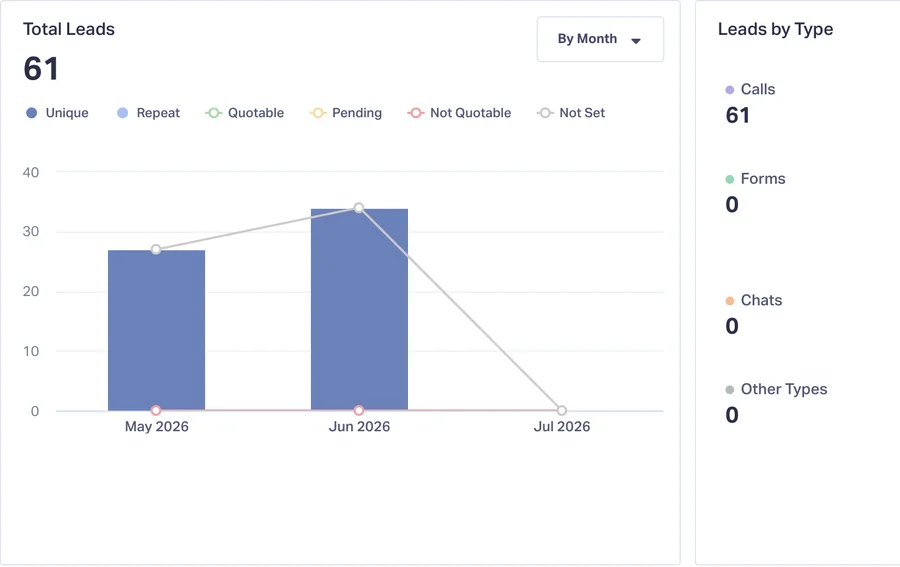
For this client, every call went straight to the owner. By his count, he closed about 68% of them.
That's the point. A good close rate means nothing if the calls never reach you.
Start with one number
Before you change anything, find out how many calls you miss. Check your phone logs for last month, or turn on call tracking for 30 days.
Then do the math above with your real numbers. Most owners are surprised, and not in a good way.
Remember the order, too. Being found comes first: see how to get into the Google Maps top 3 and why ChatGPT recommends your competitor. Answering every call is what turns that visibility into revenue.
If you run a business where calls come at all hours, like luxury transportation or personal injury law, this is usually the fastest win we find.
Frequently asked questions
Will callers know they're talking to an AI receptionist?
It sounds natural and won't pretend to be a person if asked. Most callers care about getting an answer and a booking quickly, and they get both.
Do I need a new phone number for an AI receptionist?
No. Your current number forwards to it when you choose: after hours, when the line is busy, or all the time.
What's missed-call text back?
When a call isn't answered, the caller automatically gets a text within seconds so the conversation keeps going instead of ending at voicemail.
How fast should I respond to a new lead?
As fast as possible, ideally within minutes. Buyers often contact several businesses, and the first one to respond has the best chance to win the job.
Where this fits