
Key takeaways
- CGI stands for computer-generated imagery: pictures and video made with software instead of a camera.
- Big brands have used it for years. As early as 2014, 75% of IKEA's catalog product images were computer-generated.
- Classic CGI is built from 3D models. AI-made films are newer, faster, and generated from your real photos.
- Jewelry is a perfect fit: tiny, reflective, expensive to shoot, and sold on emotion.
- 85% of people say a video has convinced them to buy. The film is the sales tool, not the decoration.
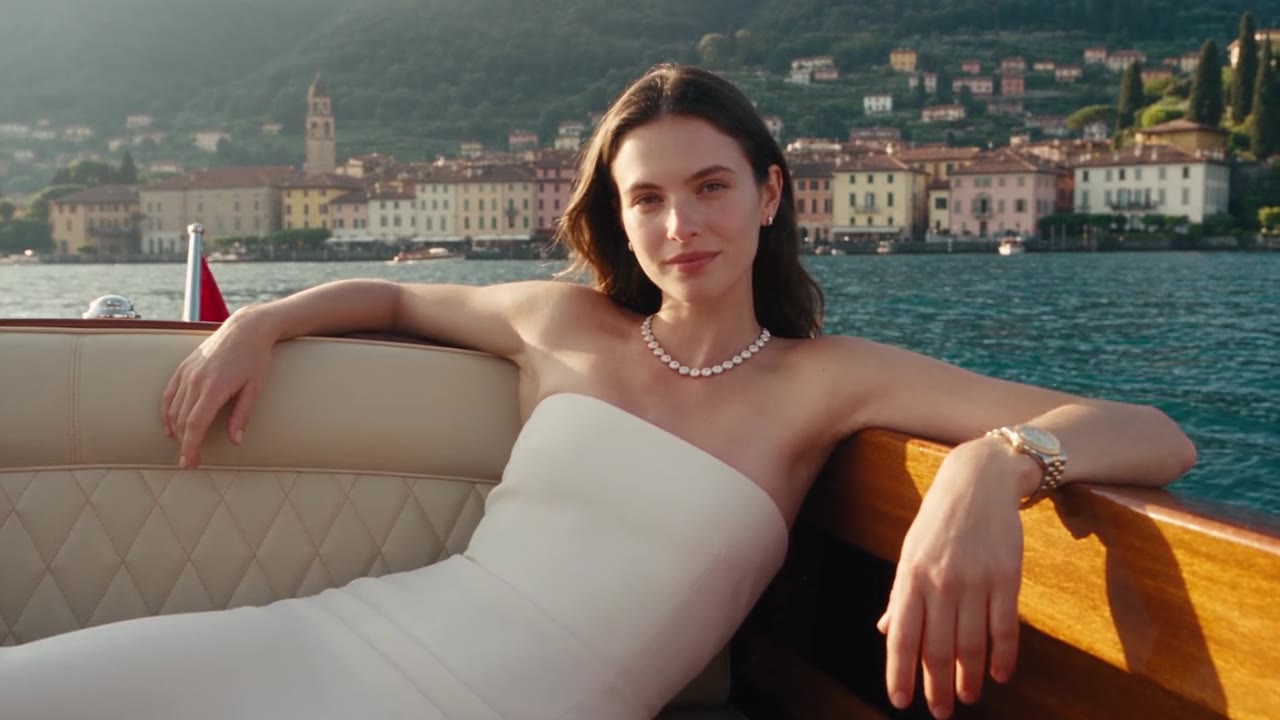
Picture a diamond ring on a hand at golden hour, on a terrace over Lake Como.
The ring is real. It sold for $85,000. The film that sold it was made on a computer.
That's CGI product marketing. And if you sell fine jewelry, it's about to change how you get seen.
What CGI means
CGI stands for computer-generated imagery. It's any still image or video made with software instead of a camera.
You've seen it your whole life. The dinosaurs in Jurassic Park. Every Pixar movie, starting with Toy Story in 1995, the first feature film made entirely on a computer. The perfect car spinning on a white floor in a TV ad.
You've also seen it without noticing. Back in 2014, IKEA said about 75% of the product images in its catalog were computer-generated, not photographed. (Slate, 2014) Nobody could tell. That was the point.
What CGI product marketing is
CGI product marketing is using those images and films to sell a product. Instead of booking a studio, a photographer, lights and a model, you create the scene on a computer.
For a jeweler, that means your ring can sit on a hand at golden hour on Lake Como. Your necklace can catch light on a velvet bust that doesn't exist. Your earrings can turn slowly in a beam of light, with every stone throwing fire.
No travel. No location fees. No waiting three weeks for the edit.
Is CGI the same as AI?
Not exactly. People use the words loosely, so here's the difference.
| Classic CGI | AI-made films | |
|---|---|---|
| How it's made | An artist builds a 3D model of the piece, adds materials and light, then renders it | Your real photos and a written direction go in; the AI generates the film |
| What you need | A 3D model or CAD file of the piece | Clear photos of the actual piece |
| Speed | Days to weeks per scene | Much faster, with many versions to choose from |
| Best for | Exact technical views, 360 spins, catalogs | Mood, story and scroll-stopping ads |
At CBM, our Seen Studio films use AI, built from photos of the real piece. That matters: what the buyer sees is what they get when they walk in.
Why jewelry is the perfect product for CGI
- It's tiny. A one-carat stone is hard to light and harder to film. On a computer, you control every reflection.
- It's reflective. Real shoots fight glare, dust and fingerprints. A generated scene has none.
- It's expensive to shoot. Insurance, security and moving a $100,000 piece to a location all cost money and nerves.
- It sells on feeling. Nobody buys a diamond for its specs alone. They buy the moment it belongs to. CGI lets you show that moment.
Does it actually sell?
Video already does the selling for most brands. In Wyzowl's 2026 survey, 85% of people said a video had convinced them to buy, and 63% said they'd most like to learn about a product by watching a short video. (Wyzowl, 2026) The same survey found 83% of marketers say video directly increased sales.
Our own proof: one Seen Studio campaign for a jeweler in New York's Diamond District sold a 7-carat fancy yellow diamond ring for $85,000. Read the full case.
Three myths about CGI jewelry
- "Buyers will feel tricked." Not when the film shows the real piece. Buyers feel tricked when what arrives doesn't match what they saw. Build from the real thing and that never happens.
- "It's only for big brands." It used to be. Big brands had 3D teams. Now a single independent jeweler can have a campaign that looks like a fashion house made it.
- "It replaces my photographer." It doesn't. Your website and certificates still need real close-ups. CGI handles the ads and the dream.
How to get started
- Pick one hero piece. The one you'd most like to sell this month.
- Take clear photos of it. Good light, several angles, nothing fancy.
- Decide the moment. Proposal, anniversary, a night out, a gift. That's the story the film tells.
- Run it where buyers are. Instagram, Facebook and WhatsApp for discovery; your Google profile and website so they can find you when they're ready.
Frequently asked questions
What does CGI stand for?
CGI stands for computer-generated imagery: still images or video made with software instead of a camera.
Is CGI considered AI?
Not traditionally. Classic CGI is built by artists from 3D models. AI-made films are generated from photos and directions. Both are computer-generated, and most people call both CGI.
Is CGI jewelry marketing honest?
It is when the film is built from the real piece and the buyer gets exactly what they saw. Seen Studio films start from photos of the actual piece.
What was the first fully CGI movie?
Toy Story, released in 1995, was the first feature film made entirely with computer-generated imagery.
Where this fits