Key takeaways
- A real camera still wins for product pages, certification close-ups and in-store.
- AI films win for ads, social and scenes you couldn't afford to shoot.
- The best AI films start from clear photos of the real piece. Bad inputs make fake-looking films.
- 63% of people would most like to learn about a product through a short video.
- Use both: a camera for proof, AI for attention.
"AI jewelry looks fake."
Sometimes that's true. Most of the AI jewelry you've seen was made from a prompt and a prayer, and it shows: melted prongs, stones that change shape, a hand with six fingers.
But that's not a reason to skip AI. It's a reason to know when to use it, and when to pick up a camera.
Where a real photo shoot still wins
- Your website product pages. Buyers zoom in. They want to see the actual stone, the actual setting, from every side.
- Certification and detail shots. Clarity, inclusions, hallmarks and the inside of the band. These need the real thing.
- In-store and print. Large displays and printed pieces need high-resolution originals.
- Custom work in progress. Showing a client their actual piece being made builds trust that nothing else can.
Where AI campaign films win
- Ads and social. You need many versions, fast, and you need them to stop a thumb mid-scroll.
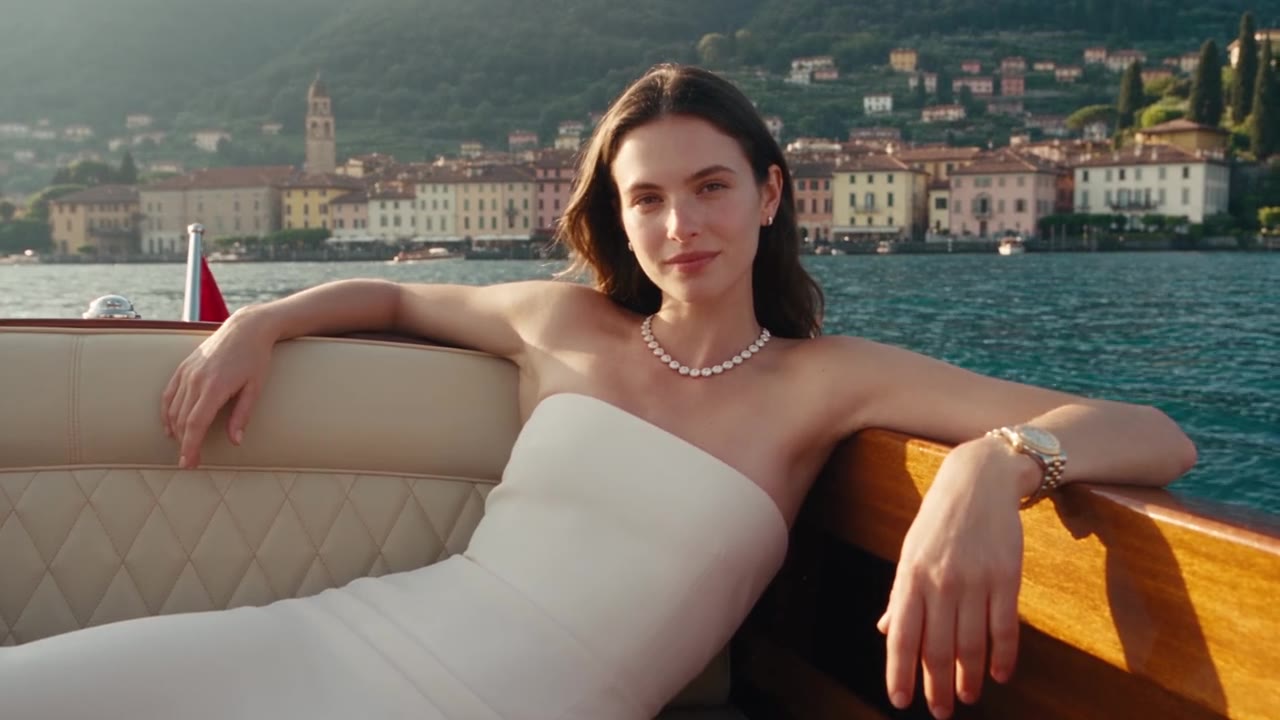
- Scenes you can't afford. Lake Como at golden hour. A yacht at dusk. A candlelit dinner in Paris. No flight, no permits, no model.
- Seasonal campaigns. Valentine's, Mother's Day and the holidays, each with its own mood, without a new shoot each time.
- Testing. Run five versions, see which one gets buyers talking, then spend behind the winner.
Side by side
| Real photo shoot | AI campaign film | |
|---|---|---|
| Shows the exact piece | Yes, every detail | Yes, when built from real photos |
| Dream locations | Expensive or impossible | Easy |
| Speed | Days to weeks | Fast, with many versions |
| Best channel | Website, print, in-store | Instagram, Facebook, WhatsApp, ads |
| Main risk | Cost and time | Looking fake if done badly |
How to make AI jewelry films that don't look fake
- Start from real photos of the piece. Several clear angles in good light. The film is only as true as what goes in.
- Keep the piece the hero. Fewer effects, more light on the stone.
- Check every frame. Prongs, stone count, metal color. If anything changes from the real piece, it doesn't ship.
- Match what's in the store. The buyer who walks in should see exactly what they saw on their phone.
A simple plan that uses both
Here's how a fine jeweler can run a month without a big production budget:
| When | Camera | AI film |
|---|---|---|
| Once a quarter | One shoot of new arrivals for your website and certificates | |
| Every month | Two or three films of your hero pieces for ads and Instagram | |
| Holidays and seasons | Seasonal versions of your best-selling piece | |
| Every custom order | Progress photos for the client |
Questions to ask before you hire anyone
- Do you build from my real piece? If the answer is "we'll generate something similar," walk away.
- Who checks every frame? Someone should compare the film to the real piece before it goes live.
- Where will it run, and to whom? A film nobody sees doesn't sell.
- How will I know it worked? You want conversations and sales, not just views.
- What happens when someone messages? The film starts the sale. Your reply finishes it.
The smart answer: use both
Use the camera for proof. Use AI for attention.
Your product pages and certificates show the truth up close. Your ads and social show the dream that makes someone want it. That's how one Diamond District jeweler we work with sold a 7-carat ring for $85,000 from a single campaign.
Frequently asked questions
Does AI jewelry photography look fake?
It can when it's made from a prompt alone. Films built from clear photos of the real piece, and checked frame by frame, look like the real thing because they are the real thing.
Should I stop doing jewelry photo shoots?
No. A real camera still wins for product pages, certification close-ups, print and in-store. AI films win for ads, social and dream locations.
What do I need to make an AI jewelry film?
Several clear photos of the actual piece in good light, plus the moment you want to show: a proposal, a gift, a night out.
Where this fits